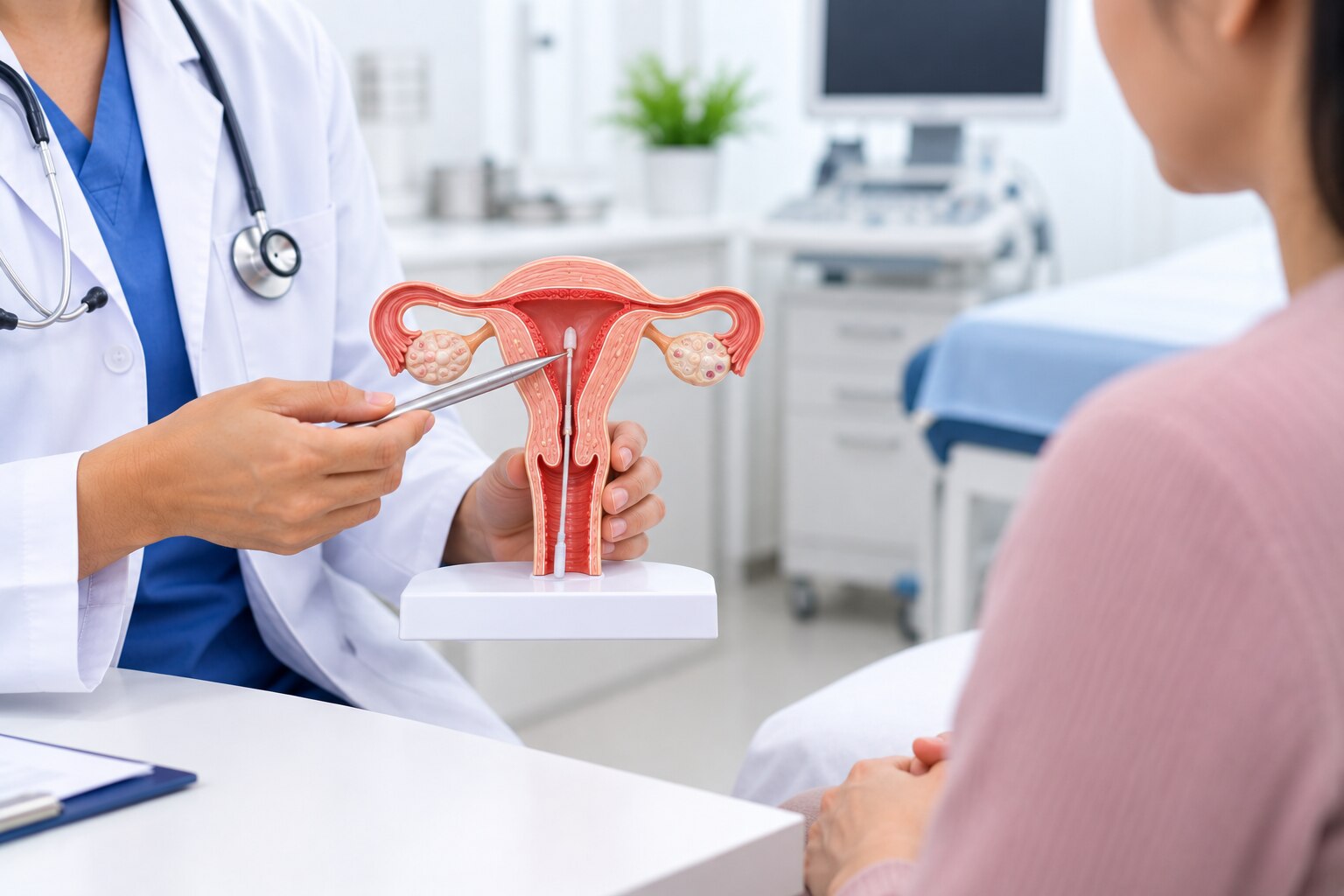
An endometrial biopsy involves passing a thin sampling tube through the cervix to remove a small piece of uterine lining for laboratory examination. Knowing how the visit is timed, what the procedure feels like, and which symptoms need medical attention helps you prepare and ask useful questions before you leave the clinic.
Key takeaways
- Confirm the biopsy reason, timing and pregnancy status before booking.
- Share medicines, bleeding history and ultrasound reports with your clinician.
- Ask how pain relief will be given before the procedure begins.
- Seek care for heavy bleeding, fever, severe pain or foul-smelling discharge.
Before the appointment: confirm why and when the biopsy is needed
Before booking, confirm why tissue is needed. An endometrial biopsy removes a small sample of the uterine lining through the cervix for laboratory examination. Common reasons include abnormal uterine bleeding, bleeding after menopause, a thickened endometrium on ultrasound, or concern about endometrial hyperplasia or cancer.
It is not an automatic part of every infertility or IVF evaluation.
Ask the clinic these questions before choosing a date:
- Do I need a pregnancy test, and how will pregnancy be excluded?
- Which cycle day should I attend for my reason for testing?
- Should I postpone the appointment because of heavy bleeding, a recent pelvic infection, or a cervical or uterine problem?
- Can I take pain medicine beforehand, and may a support person accompany me?
- Which pathology laboratory will examine the sample, and when will someone review the result with me?
Tell the clinician about possible pregnancy, anticoagulants such as warfarin or apixaban, aspirin, bleeding disorders, allergies, current medicines, and previous cervical procedures. Pregnancy is a reason not to perform the biopsy.
Menstrual timing depends on the purpose. A biopsy investigating abnormal bleeding follows the clinician’s examination and scheduling needs; it does not use the same timing as a fertility-related test. If the biopsy forms part of a receptivity or research protocol, the clinic may prescribe a specific cycle day or post-ovulation day.
Do not select that date yourself. Good endometrial biopsy preparation in Zirakpur includes confirming local appointment and laboratory arrangements.
Preparing for the visit: medicines, reports and pain planning
Before an endometrial biopsy appointment in Zirakpur, tell the clinic about pregnancy possibility, medicines, medical conditions, and your pain concerns. Pregnancy must be excluded because an endometrial biopsy should not be performed during pregnancy.
- Report all medicines, including aspirin, anticoagulants such as warfarin or apixaban, diabetes medicines, supplements, and allergy medicines. Do not stop a prescribed blood thinner without instructions from the clinician.
- Mention a bleeding disorder, very heavy current bleeding, medicine allergies, recent pelvic infection, fever, cervical narrowing, uterine problems, or a previous difficult pelvic examination.
- Ask whether you need a urine pregnancy test, whether to fast, and whether your regular morning medicines should be taken. Fasting is not routinely needed for many office biopsies, but your clinic’s instructions take priority.
- Ask what pain relief is safe for you. An anti-inflammatory medicine before the visit may be suggested, but check first if you have ulcers, kidney disease, an allergy, take anticoagulants, or have been told to avoid it.
- Bring your ultrasound reports, previous biopsy or pathology reports, discharge summaries, and a written medicine list with doses. Record the date, duration, and heaviness of recent bleeding.
- Confirm which pathology laboratory will receive the sample, when results are expected, and how the clinician will review them. Ask whether a support person may attend and whether you need transport.
This preparation also applies to an endometrial biopsy appointment in Zirakpur; local laboratory, scheduling, and escort rules must be confirmed with the chosen clinic.
During the procedure: what happens in the examination room
The sampling itself usually takes only a few minutes, but the endometrial biopsy process in Zirakpur includes consent, pregnancy screening, positioning and brief observation before you leave. You remain awake unless your clinician has arranged sedation for a specific reason.
1. You undress from the waist down, lie on the examination bed and place your feet in supports. The clinician confirms the procedure, checks for pregnancy risk and answers last-minute questions.
2. A speculum is inserted into the vagina to hold the walls apart. You may feel pressure or stretching, similar to a cervical screening examination, rather than sharp pain.
3. The clinician cleans the cervix with an antiseptic solution. This can feel cold or wet. A thin sampling tube then passes through the cervical opening into the uterus.
4. Gentle suction draws a small amount of endometrial tissue into the tube. You may feel a sudden, strong menstrual-like cramp, pinching or pressure as the tube enters and the sample is collected. Tell the clinician if the pain becomes difficult to tolerate.
5. The tube and speculum are removed, and the tissue is placed in a labelled container for laboratory examination. Staff check that you feel well before discharge.
For an endometrial biopsy appointment in Zirakpur, ask who will review the result and which pathology laboratory will process it. The location does not change the procedure, but clinic instructions about support persons, activity and result timing can differ. Expect light spotting or mild cramping immediately after sampling.
Immediately afterward: recovery, warning signs and pathology results
Expect mild period-like cramps and light vaginal bleeding or spotting after the procedure. Endometrial biopsy recovery in Zirakpur usually allows normal activities soon, but follow your clinic’s instructions about intercourse, bathing, strenuous exercise and tampon use; sanitary pads are the safer choice immediately afterward.
Ask when the pathology report will be ready and whether the clinic or laboratory will contact you.
Seek medical help promptly if you develop:
- Bleeding that rapidly soaks a pad or continues heavily
- Severe or worsening lower-abdominal pain that does not improve with the advised medicine
- Fever, chills or foul-smelling vaginal discharge
- Dizziness, fainting, weakness or trouble breathing
The report describes the tissue collected from the uterine lining. It can show:
| Pathology finding | What it can mean |
|---|---|
| Normal cycling endometrium | Changes that match the menstrual-cycle phase |
| Inactive or atrophic endometrium | A thin, inactive lining, often seen after menopause |
| Endometrial polyp | A localised overgrowth that can contribute to irregular bleeding |
| Endometrial hyperplasia | An overgrown lining; some forms carry a higher cancer risk |
| Inflammation | Tissue changes suggesting endometritis or another inflammatory process |
| Malignancy | Cancerous cells requiring prompt specialist planning |
Results may take longer when the pathologist needs extra stains, deeper sections or a second review. A normal sample does not always explain persistent bleeding, so arrange review if symptoms continue.
Planning follow-up in Zirakpur: interpreting the result and next steps
Book a results review before leaving your endometrial biopsy appointment in Zirakpur. Ask when the pathology report is expected, which laboratory is processing it, and whether the clinician will call, message, or see you in person.
At the review, ask what the report means and what happens next:
- Benign or normal tissue: discuss whether bleeding still needs ultrasound, hysteroscopy, or another cause investigated.
- Insufficient tissue: ask whether repeat sampling or hysteroscopy is safer and more informative.
- Hyperplasia without atypia: ask about hormonal treatment and the timing of repeat sampling.
- Atypical hyperplasia or cancer: request prompt referral to a gynaecologist or gynaecologic oncologist.
Do not wait for the scheduled review if bleeding becomes heavy, pain worsens, you develop fever, feel faint, or notice foul-smelling discharge. Contact the clinic or seek urgent care; these symptoms are not routine endometrial biopsy recovery in Zirakpur.
If bleeding continues after the expected recovery period, record pad use, clots, pain, and bleeding dates, then send that information to the clinician. At Kore Fertility Centre, ask whether your result changes the timing of fertility treatment or requires a different uterine assessment.
An endometrial biopsy is not automatically part of infertility testing, and endometrial scratching is not a routine way to improve IVF or IUI success; the American Society for Reproductive Medicine does not support routine use for improving live-birth outcomes.
Clarify the specific question the endometrial biopsy process in Zirakpur is meant to answer before consenting to repeat procedures.
Related service
Endometrial Biopsy at Kore Fertility Centre is a safe and effective diagnostic procedure used to evaluate the lining of the uterus (endometrium). View service → |
Frequently asked questions
Why is an endometrial biopsy needed?
A clinician may recommend it for abnormal uterine bleeding, bleeding after menopause, a thickened endometrium on ultrasound, or concern about endometrial hyperplasia or cancer.
How should you prepare for an endometrial biopsy appointment in Zirakpur?
Bring your ultrasound and other reports, list every medicine and supplement, and tell the clinician about pregnancy possibility, allergies, bleeding disorders and previous pelvic procedures. Ask in advance about pain relief and whether you need to change any medicine.
What happens during an endometrial biopsy?
You lie on an examination table while the clinician examines the cervix, passes a thin sampling device through it and removes a small piece of the uterine lining for laboratory testing. Cramping is common during sampling.
What is normal during endometrial biopsy recovery?
Mild cramping and light bleeding or spotting can occur after the procedure. Follow the clinic’s instructions about activity, intercourse and tampons, and contact the clinic for heavy bleeding, fever, severe pain or foul-smelling discharge.
When will endometrial biopsy results be available?
The tissue goes to a pathology laboratory, and the clinic will explain when to expect the report. At follow-up, ask what the result means and whether you need observation, medication, hysteroscopy or another treatment.
Keywords