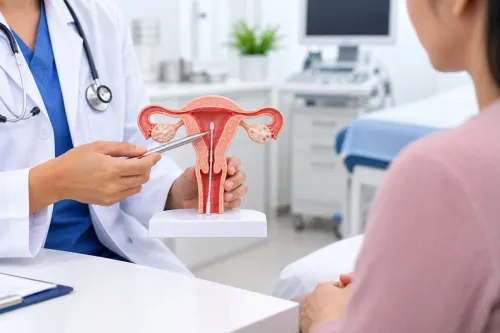
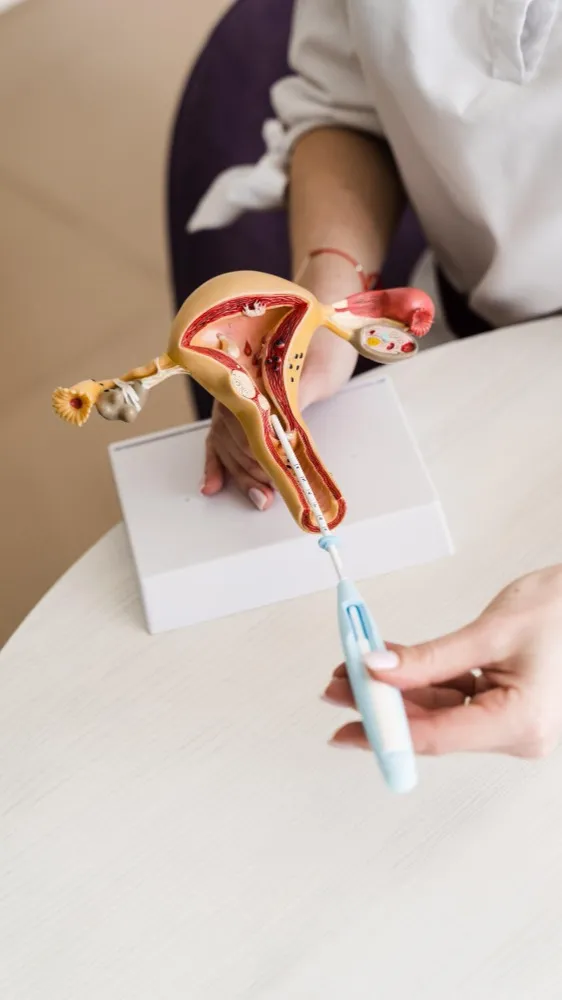
IUI Treatment is a comparatively simple fertility procedure in which specially prepared sperm is placed directly inside the uterus around the time of ovulation. Fertilization still occurs inside the body, so IUI differs fundamentally from IVF.
The procedure can be helpful in selected cases, but its suitability depends on several conditions. It should not be treated as a universal first step for every couple experiencing difficulty conceiving.
Who May Be Suitable for IUI?
A fertility specialist may consider IUI when there is:
- Unexplained infertility
- Mild reduction in sperm count or movement
- Difficulty with intercourse or ejaculation
- A cervical factor affecting sperm movement
- Irregular ovulation that can be managed medically
- A need to use donor sperm
- A reasonable chance of conception with at least one open fallopian tube
Before recommending IUI, the doctor commonly assesses ovulation, ovarian reserve, semen parameters and the condition of the fallopian tubes.
IUI is generally less suitable when both tubes are blocked, sperm abnormalities are severe, ovarian reserve is significantly reduced or advanced endometriosis is present. IVF or another approach may then offer a more appropriate pathway.
How an IUI Cycle Is Planned
Some patients undergo IUI during a natural ovulation cycle. Others receive oral medicines or injections to stimulate follicle development.
Ultrasound monitoring helps the fertility team determine:
- How many follicles are developing
- Whether a follicle is approaching maturity
- When ovulation is expected
- When insemination should be performed
- Whether the ovarian response is excessive
Careful monitoring matters because fertility medicines can sometimes cause several follicles to develop. This may increase the chance of multiple pregnancy.
What Happens on the Procedure Day?
A semen sample is processed in the laboratory to separate progressively moving sperm from seminal fluid and less suitable cells. This preparation is often called sperm washing.
The concentrated sperm sample is placed into the uterus through a thin catheter. The procedure usually takes only a few minutes. Some patients experience mild cramping, but significant pain is uncommon.
Patients can usually return to routine activities shortly afterwards unless their doctor provides different instructions. Prolonged bed rest does not generally determine whether implantation occurs.
What Happens After IUI?
Medicines may be prescribed to support the uterine lining in certain cycles. Patients should follow the prescribed schedule and avoid starting or stopping medication without medical advice.
A pregnancy test is usually planned approximately two weeks after insemination. Testing prematurely can cause unnecessary confusion, especially if a trigger injection containing pregnancy-related hormone was used.
How Many IUI Attempts Are Reasonable?
There is no single correct number for every couple. The decision depends on:
- The woman’s age
- Ovarian reserve
- Duration of infertility
- Semen quality
- Previous treatment response
- Financial and emotional considerations
- The underlying diagnosis
Repeating IUI without reviewing an unsuccessful cycle may delay a more suitable treatment. Conversely, moving directly to IVF may be unnecessary for a couple with favourable findings.
Couples from Zirakpur, Dhakoli and adjoining areas can benefit from choosing a centre where monitoring and insemination are coordinated without avoidable travel. Kore Fertility Centre, Dr. Nitasha Gupta provides evaluation-based guidance so patients understand why IUI Treatment is being recommended and when reconsideration may be appropriate.
IUI is most valuable when it is offered to the right patient at the right time. A diagnosis-led approach gives couples clearer expectations and prevents treatment from becoming an open-ended series of attempts.
Keywords